
Latches and Bolts
What is Latches and Bolts
Latches and bolts are both mechanical fasteners mainly used on internal doors where a lock is not required. Latches are compatible with most levers and knobs, bolts are compatible with a bathroom turn and release. Smaller than other variations of locks, a tubular latch can be fitted with much less effort than a traditional lock and requires minimal cutting and drilling of the door. They are available in a variety of sizes and finishes to ensure you can replace like for like and match with current decor.
Benefits of Latches and Bolts
Exceptional Security
The most obvious benefit is increased security. Latches and bolts offer more protection than a standard lock because they require more effort to open and can be locked from the inside without a key.
Visually Appealing
The aesthetic appeal of latches and bolts is another important benefit. Their design can significantly enhance the look of a door, adding a touch of elegance. Whether using matter which type of latches and bolts is used, they bring a classic, sophisticated look to any type of door.
Durability
Latches and bolts are generally more durable than standard locks. They aren't as susceptible to picking and breaking, so they last longer. Latches and bolts are quick and easy to install. A local locksmith should be able to install your latches and bolts in one quick appointment.
Available in Several Sizes
Latches and bolts are available in various sizes, offering flexibility for different door dimensions. They can be customized to fit both larger and smaller doors, addressing any sizing issues that may arise with latches . This adaptability ensures that latches and bolts can be tailored to meet diverse needs effectively.
-
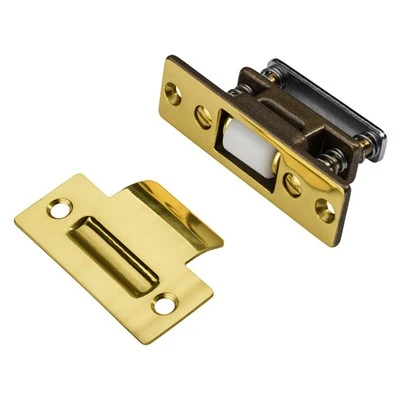
![Brass Roller Catch]() Brass Roller CatchThe Kaitrum brass roller catch is a simple yet effective door hardware solution that keeps doors securely closed without the need for a latch or lock. Featuring a spring-loaded roller, it fits...read more
Brass Roller CatchThe Kaitrum brass roller catch is a simple yet effective door hardware solution that keeps doors securely closed without the need for a latch or lock. Featuring a spring-loaded roller, it fits...read more -
![Dutch Door Latch]() Dutch Door LatchOur Dutch door latch enables independent securing of the top and bottom halves of a Dutch door, offering enhanced versatility and control. This feature proves particularly valuable for pet and...read more
Dutch Door LatchOur Dutch door latch enables independent securing of the top and bottom halves of a Dutch door, offering enhanced versatility and control. This feature proves particularly valuable for pet and...read more -
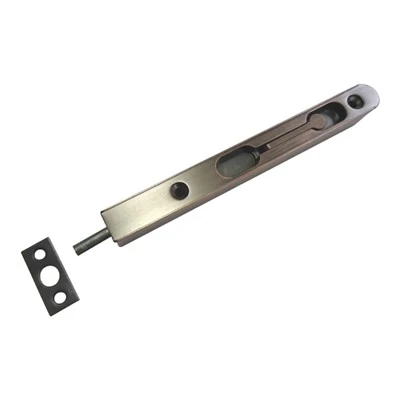
![Concealed Flush Bolt]() Concealed Flush BoltA Concealed Flush Bolt is a hidden door bolt designed to secure double doors, typically installed on the inactive leaf. This bolt is embedded into the edge of the door, with a shutter thickness...read more
Concealed Flush BoltA Concealed Flush Bolt is a hidden door bolt designed to secure double doors, typically installed on the inactive leaf. This bolt is embedded into the edge of the door, with a shutter thickness...read more -
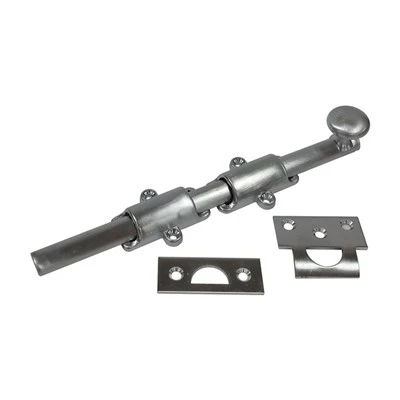
![12 Inch Surface Bolt]() 12 Inch Surface BoltThe 12-inch surface bolt is a popular security component used with various door hardware systems. It provides an extra layer of security, complementing handles, latches, or knobs. Featuring a...read more
12 Inch Surface BoltThe 12-inch surface bolt is a popular security component used with various door hardware systems. It provides an extra layer of security, complementing handles, latches, or knobs. Featuring a...read more -
![Flush Bolts for Wood Doors]() Flush Bolts for Wood DoorsOur Flush Bolts for Wood Doors offer reliable security and a sleek finish. Each wood flush bolt or manual flush bolt wood fits perfectly on any wood door flush bolt setup. Choose automatic flush...read more
Flush Bolts for Wood DoorsOur Flush Bolts for Wood Doors offer reliable security and a sleek finish. Each wood flush bolt or manual flush bolt wood fits perfectly on any wood door flush bolt setup. Choose automatic flush...read more -
![Lever Extension Flush Bolt]() Lever Extension Flush BoltThis heavy-duty lever extension flush bolt features an automatic holding spring to maintain secure tension in both retracted and projected positions. Ideal as a flush bolt lock for fire-rated...read more
Lever Extension Flush BoltThis heavy-duty lever extension flush bolt features an automatic holding spring to maintain secure tension in both retracted and projected positions. Ideal as a flush bolt lock for fire-rated...read more -
![Manual Flush Bolt]() Manual Flush BoltThis manual flush bolt features a spring-loaded snap-action lever that retracts the bolt when lifted and securely projects it into the head frame when pushed down. Designed for reliable...read more
Manual Flush BoltThis manual flush bolt features a spring-loaded snap-action lever that retracts the bolt when lifted and securely projects it into the head frame when pushed down. Designed for reliable...read more -
![Heavy Duty Dutch Door Bolt]() Heavy Duty Dutch Door BoltOur Heavy Duty Dutch Door Bolt allows you to secure the top and bottom halves of a Dutch door separately, providing flexibility for both privacy and ventilation. Ideal for keeping pets or children...read more
Heavy Duty Dutch Door BoltOur Heavy Duty Dutch Door Bolt allows you to secure the top and bottom halves of a Dutch door separately, providing flexibility for both privacy and ventilation. Ideal for keeping pets or children...read more -
![Heavy Duty Flush Bolt]() Heavy Duty Flush BoltThe Heavy Duty Flush Bolt is a robust, high-performance locking mechanism designed for securing double doors. Made from durable materials like stainless steel or zinc, this bolt ensures maximum...read more
Heavy Duty Flush BoltThe Heavy Duty Flush Bolt is a robust, high-performance locking mechanism designed for securing double doors. Made from durable materials like stainless steel or zinc, this bolt ensures maximum...read more -
![Roller Ball Catch]() Roller Ball CatchOften used with large pivot entry doors or doors featuring dummy knobs, a roller ball catch keeps doors securely in place without requiring a deadbolt or latch. Commonly installed on the top of...read more
Roller Ball CatchOften used with large pivot entry doors or doors featuring dummy knobs, a roller ball catch keeps doors securely in place without requiring a deadbolt or latch. Commonly installed on the top of...read more


why choose us
Quality Assurance
Committed to Customer Satisfaction: ISO9001 certified Quality Management System. For each process, we have strict inspection standards, and we always insist that quality is life.
Perfect Service
With rich experience and one-to-one service, we can help you choose products and answer technical questions. Perfect after-sales service as an effective value-added service for customers.
Reasonable Price
We have a professional purchasing team and costing team, trying to reduce costs and profits, and provide you with a good price.
Quick Transportation
We cooperate with professional sea shipping, air and logistics companies to provide you with the best transportation solution.
Types of Latches and Bolts
Tubular Latches
Tubular door latches consist of a latch bolt that is attached to the door and a striker plate that is attached to the frame of the door. The latch bolt is inserted into the striker plate to secure the door. They are typically installed indoors that have a cylindrical-shaped door knob hole, such as a front door. Tubular door latches are also available in keyed versions, which can be locked and unlocked with a key.
Roller Bolt Latches
A roller bolt door latch uses a bolt that is mounted on a rolling track. The bolt rests in a track on the door frame and has a roller on its end that rides in a corresponding track on the door itself. When the door is closed, the bolt is pulled into the door frame, preventing it from being opened from the outside.
Rim Latches
A rim door latch is mounted on the surface of a door rather than being recessed into it. It consists of a strike plate and a latch bolt. The strike plate is mounted on the door frame, and the latch bolt attaches to the door. When the door is closed, the latch bolt slides into the strike plate, locking the door shut.
Flat Latches
A flat door latch secures a door by latching it to the door frame. These latches consist of a latch plate and a striker plate. The latch plate is mounted on the door, and the striker plate is mounted on the door frame. The striker plate has a hole that corresponds to the hole in the latch plate. When the door is closed, the striker plate slides over the latch plate and pushes it into the hole in the door frame, securing the door.
Spring-Loaded Latches
A spring-loaded door latch uses a spring to keep the latch in place. This latch can be opened by pushing down on the latch and then pulling the door open. It is easy to operate; all you have to do is press down on the latch, and the door will open. The spring will automatically push the latch back into place to secure the door.
Sliding Bolt Latches
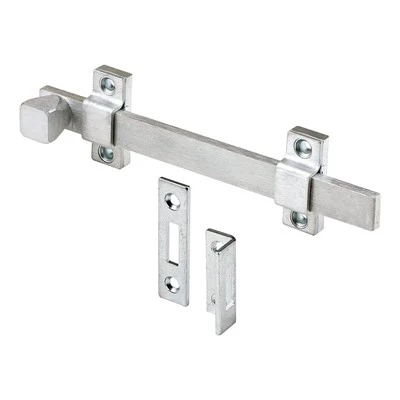
A sliding bolt door latch is mounted on the surface of a door, rather than in the door's frame. It consists of a bolt, typically made of metal, that slides into and out of a slot or hole in the door's surface. It consists of a long, metal bolt that slides along a track to secure the door in place. There is usually a handle or lever on one end of the bolt that allows you to easily move it back and forth.
Hook & Eye Latches
Hook-and-eye door latches are typically made of metal and consist of two pieces: a hook and an eye. The hook is attached to the door, and the eye is attached to the frame. When the door is closed, the hook catches the eye and holds the door closed.
Chain Latches
Chain door latches use a chain to keep the door closed. One end of the chain is attached to the door, and the other end is attached to the strike plate on the door's frame. When the door is closed, the chain tightens and keeps the door closed, preventing someone from opening the door from the opposite side.
Swing-Bar Latches
A swing-bar door latch uses a swinging bar to hold the door closed. The bar is attached to the door frame, and the door itself has a hole in it through which the bar passes. When the door is closed, the bar swings inward and locks against the door frame, preventing the door from opening.
Gravity Latches
Gravity door latches are a type of latch that uses force to keep a door closed. The latch is typically positioned at the top of the door and includes a mechanism that allows it to be released when pressure is applied. The latch is typically a metal plate or bar attached to the door frame, and the striker is a metal plate or bar attached to the door. When the door is closed, the striker engages the latch and holds the door in place.
Material of Latches and Bolts
Aluminum
Aluminum is wonderful because of its corrosion resistance. Aluminum is a lightweight material. It is more brittle than iron, so when choosing an aluminum latches and bolts it's vital to use a gate stop, which will prevent your gate from "overclosing" and putting undue stress on the arm of the latches and bolts. Aluminum latches and bolts are usually cast into many shapes and styles and are powder coated to black, since most coordinating gate hardware is also black.
Bronze
Bronze is on the higher end of price spectrum for latches and bolts, but it is well worth the expense. Bronze is cast in the same vein as iron and aluminum, achieving lovely shapes. Bronze is heavy and substantial and feels great in your hand. Bronze latches and bolts come in many styles, including traditional, contemporary, and old world.
Stainless steel
Stainless steel is often used to craft modern and contemporary latches and bolts. Stainless steel is substantial and feels and look sleek. If you’re looking for modern gate hardware or contemporary gate latches and bolts, we suggest you look for a stainless steel latches and bolts. Stainless steel can be powder coated, but mostly you'll see it in its raw form.
How to Install Latches and Bolts
Measure and mark out the latches position
If you are starting with a brand-new door slab, your first step is to make sure you’re installing the latches on the correct side. This will make sure both the hinges and the latches have the support they need to keep your door functioning. Your door latches will usually sit at around hip level. Measure the latches position on another door in your home to determine the exact height. This should be a relatively simple measurement to find and the one with the most wiggle room if you get it wrong.
Drill space for the latches case
Use a drill bit to bore a hole from the edge of the door to accommodate the latches. The size of the drill bit will depend on your latches but 20mm is usually a good choice. You want to use the biggest size possible without creating a hole bigger than the front of your latches or interfering with the space where the screws will sit.
Chisel out space for the face plate
Next, slowly and carefully chisel out a space for the face plate to sit in. As mentioned above, this only needs to be about 1mm deep to allow for the latches to fit flush with the doors edge. The best way to do this is to make a series of chisel marks roughly 5mm apart between the top and bottom face plate marks. Do this with the bevelled face of the chisel flat with the edge of the door and use a series of light taps.
Fit the door latches
Now it is time to fix the latches in place. First off, pop the latches back into the hole and mark two pilot holes for the face plate screws. Remove the latches to drill, then countersink, the pilot holes. Put the latches back in then secure it in place using the two screws and holes you just drilled. If you have measured, marked and drilled everything correctly your tubular latches should be a perfect fit, flush with the door's edge.
Measure and mark out the strike plate
The final step is to notch out a hole in the door jamb and fit the strike plate. To do this, push the door closed and draw a pencil line on the door frame to mark the top and bottom of the latches itself. Hold the striker plate up against the door frame, and centre these two lines in the middle. Mark off where you want the screws to go, then remove the plate and drill the holes.
Fit the strike plate
Remove the striker plate and use a hammer and chisel to notch out a space in the door frame. Use the same technique as you did on the door. Countersink the screw holes. At this point, the quickest thing to do is to fit the striker plate, and then notch out the space for the door latches to sit through the gap. This will protect the door frame, and show you exactly where you need to cut.
On Which Doors can the Latches and Bolts be Installed?
Interior Doors
Latches and bolts can be installed on interior doors, such as bedroom, bathroom, and closet doors, to provide privacy and security within a home or office.
01
Exterior Doors
They can be installed on exterior doors, including front doors, back doors, and side entry doors, to enhance security and prevent unauthorized access.
02
Wooden Doors
Latches and bolts are commonly installed on wooden doors, both solid and hollow core, as they can be easily fitted with screws or bolts.
03
Metal Doors
These security devices can also be installed on metal doors, often used in industrial settings, garages, or commercial buildings, to provide robust security.
04
Sliding Doors
Specialized latches and bolts can be installed on sliding doors, such as patio doors or closet doors, to secure them in place and prevent them from being easily opened.
05
Consider the Gate Material
The material of your gate plays a vital role in selecting the appropriate latches. Different materials have different requirements and compatibility with specific latches types. Wooden and vinyl gates pair well with those types of latches, plusring latches anddecorative latches.
Determine the Gate Type
Before choosing a latches, you must identify the type of gate you have, as each gate type has specific latches requirements to ensure proper functionality and security.
Types of Gate Latches & Locks
All latches and locks provide varying degrees of security and convenience. Ensuring that your choices match your gate type and specific needs is essential.
Evaluate Security Features
Security is of utmost importance when deciding how to choose the right latches. You want a latches that provides reliable protection for your property. Look for latches that offer features such as self-locking mechanisms, key-operated locks, or combination locks.
Assess Durability and Weather Resistance
To choose the right latches, you will need to assess the durability and weather resistance of the latches. Latches are exposed to various weather conditions, so choosing a latch that can withstand the elements in your area is crucial.
Consider the Installation Process
All latches and locks come with instructions to make the installation process as seamless as possible. Homeowners and business owners can install most gate latches independently, but hiring a professional is the best way to ensure the hardware is installed and functioning correctly the first time.
Consider Aesthetics and Style
While functionality and security are paramount, it's also essential to consider the aesthetics and style of the latches. The latches should complement the design of your gate and overall property. Whether you prefer a sleek and modern latches or a more traditional and decorative one, make sure it adds to the visual appeal of your gate.

Regular Cleaning: Periodically clean latches and bolts with a damp cloth to remove dust, dirt, and debris. This helps prevent corrosion and ensures smooth operation.
Lubrication: Apply a suitable lubricant, such as silicone spray or graphite powder, to the moving parts of latches and bolts. This reduces friction, prevents wear, and ensures smooth functioning.
Tightening Screws: Regularly check and tighten any loose screws or fasteners on latches and bolts. Loose components can cause misalignment and improper operation.
Inspecting for Wear: Regularly inspect latches and bolts for signs of wear, such as rust, corrosion, or deformation. Replace any damaged parts to maintain security and functionality.
Preventing Misalignment: Ensure that the latches and bolts are correctly aligned with their respective strike plates or catches. Misalignment can cause malfunction and increase wear on the components.
FAQ
We're professional latches and bolts manufacturers and suppliers in Taiwan, specialized in providing high quality customized service. We warmly welcome you to buy latches and bolts for sale here and get free sample from our factory.
12 Inch Surface Bolt, Brass Roller Catch, Heavy Duty Flush Bolt